BIM Career Paths in 2026: From BIM Manager to Information Manager
BIM career paths now extend far beyond producing and coordinating digital models.
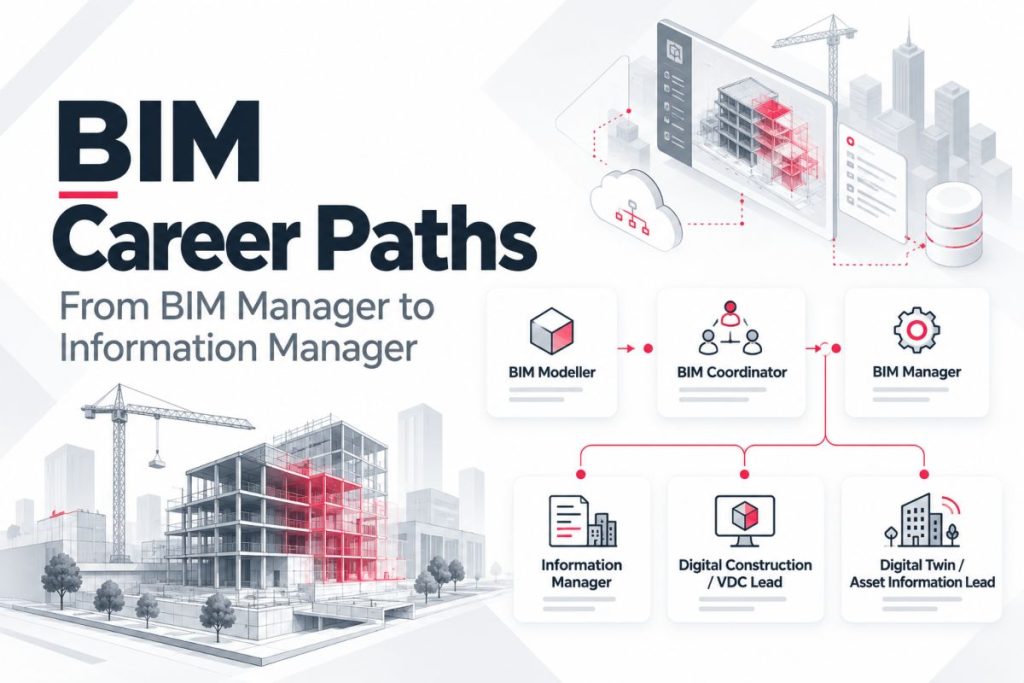
Professionals can move into BIM Management, Information Management, digital construction, Virtual Design and Construction, asset information and digital twin roles.
The best route depends on whether you prefer technical modelling, multidisciplinary coordination, information governance, project delivery or the long-term management of asset data.
Draft changes proposed for ISO 19650 also reflect a wider industry shift from model-led BIM towards Information Management across the asset lifecycle.
This does not mean every BIM Manager is simply being renamed an Information Manager. The roles can overlap, but their responsibilities are not always the same.
What Are the Main BIM Career Paths?
The main BIM and Information Management career paths include:
Common BIM and Information Management career paths
BIM Modeller or BIM Technician
BIM Coordinator
BIM Manager
Information Manager
Digital Construction or VDC Lead
Digital Twin or Asset Information Lead
There is no single official career ladder. Job titles and responsibilities vary between consultants, contractors, designers, asset owners and technology providers.
The work being performed often matters more than the title itself.
Our guide to BIM specialists, roles and responsibilities explains the traditional BIM Modeller, Coordinator and Manager structure. Here, we look at how those roles are expanding into wider Information Management, delivery and asset lifecycle careers.
Are BIM Roles Changing Under ISO 19650?
The language surrounding BIM is changing, but familiar job titles will not disappear overnight.
Draft revisions to ISO 19650 broaden the focus from BIM-specific processes towards Information Management. Proposed terminology includes:
Proposed ISO 19650 terminology changes
→
Information Management (IM)
→
Information Production Requirements (IPR)
→
Information Production Plan (IPP)
→
Information Production Schedule (IPS)
These remain proposed changes rather than final terminology. The Draft International Standard is still progressing through the standards-development process, while the existing published editions of ISO 19650 remain current.
ISO 19650 is also concerned with information management functions, activities and responsibilities, rather than prescribing one compulsory job title. Those responsibilities may be assigned to different people or teams depending on the organisation and project.
A BIM Manager may therefore carry out Information Management responsibilities, but that does not make BIM Manager and Information Manager automatically interchangeable.
BIM Modeller or BIM Technician
A BIM Modeller or BIM Technician creates and maintains discipline-specific digital models and information.
The role is usually connected to a core design or construction discipline. For example, the person may also be an:
BIM Modellers and Technicians may also work within disciplines such as:
Architectural Technician or Technologist
Structural Technician
Mechanical or Electrical Engineering Technician
Architect or Engineer carrying out hands-on modelling work
Standalone BIM Technician roles also exist, but they will normally work under the direction of a lead design or construction discipline.
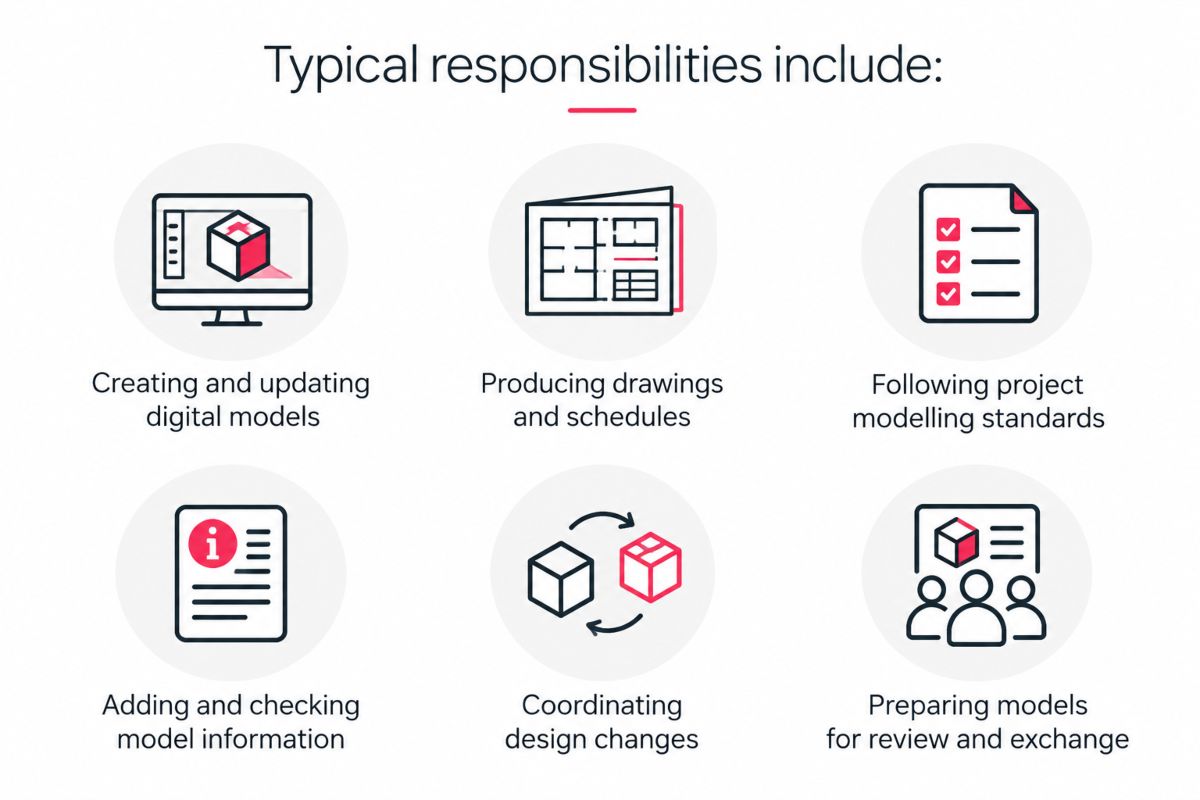
The role requires more than knowing how to use Revit or another authoring platform.
BIM Modellers must understand what information is required, how it should be structured and how their work connects with the wider project.
Progression may lead to senior modelling, discipline leadership, BIM coordination, automation or computational design.
BIM Coordinator
A BIM Coordinator brings together models and information produced by different disciplines.
The role commonly involves coordinating architectural, structural and building services information to identify issues before they affect construction.
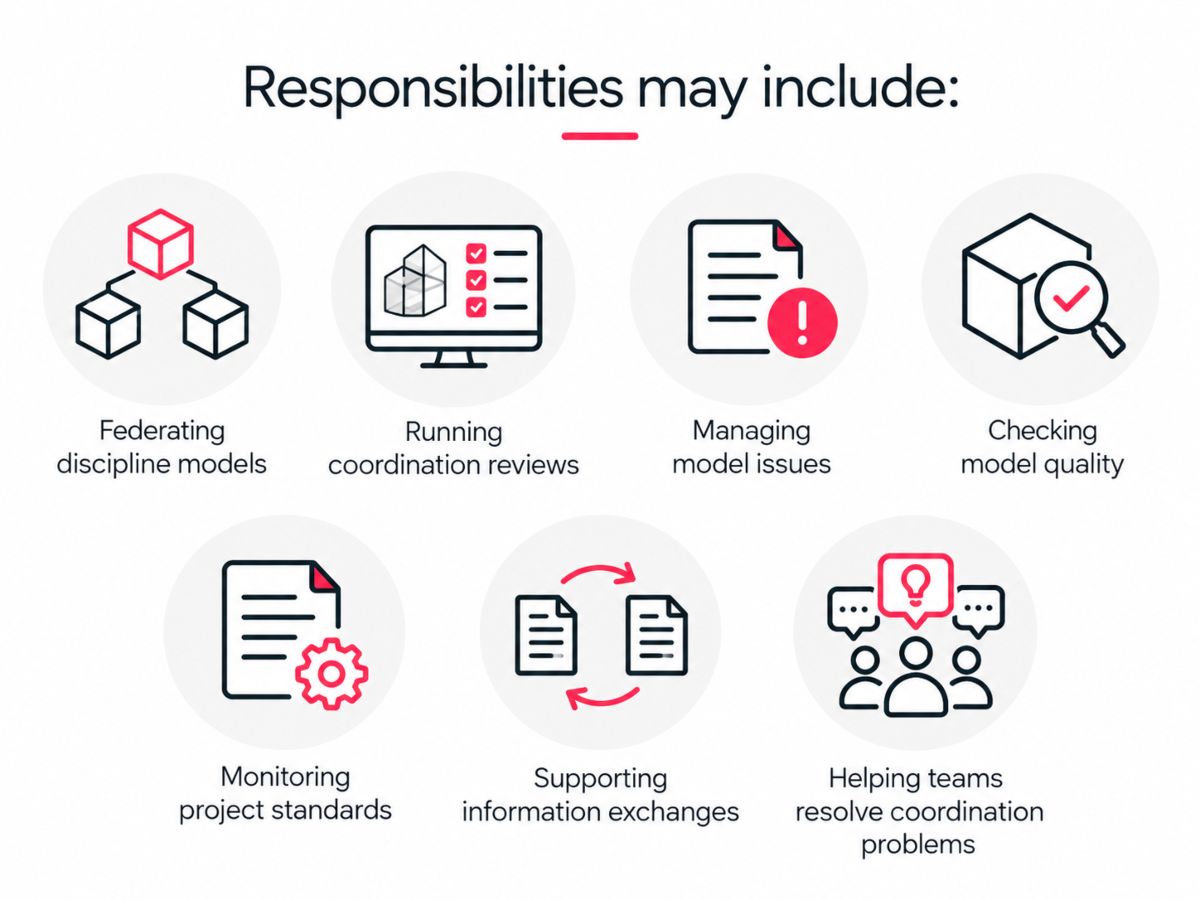
Although clash detection in BIM is an important part of the job, coordination is not simply about finding objects that collide.
A strong BIM Coordinator understands design intent, construction priorities and project deadlines. They must also communicate issues clearly enough for different teams to resolve them.
From here, professionals may progress into BIM Management, Information Management or digital construction delivery.
BIM Manager
A BIM Manager oversees how BIM is implemented across a project or organisation.
Depending on the employer, the role may include:
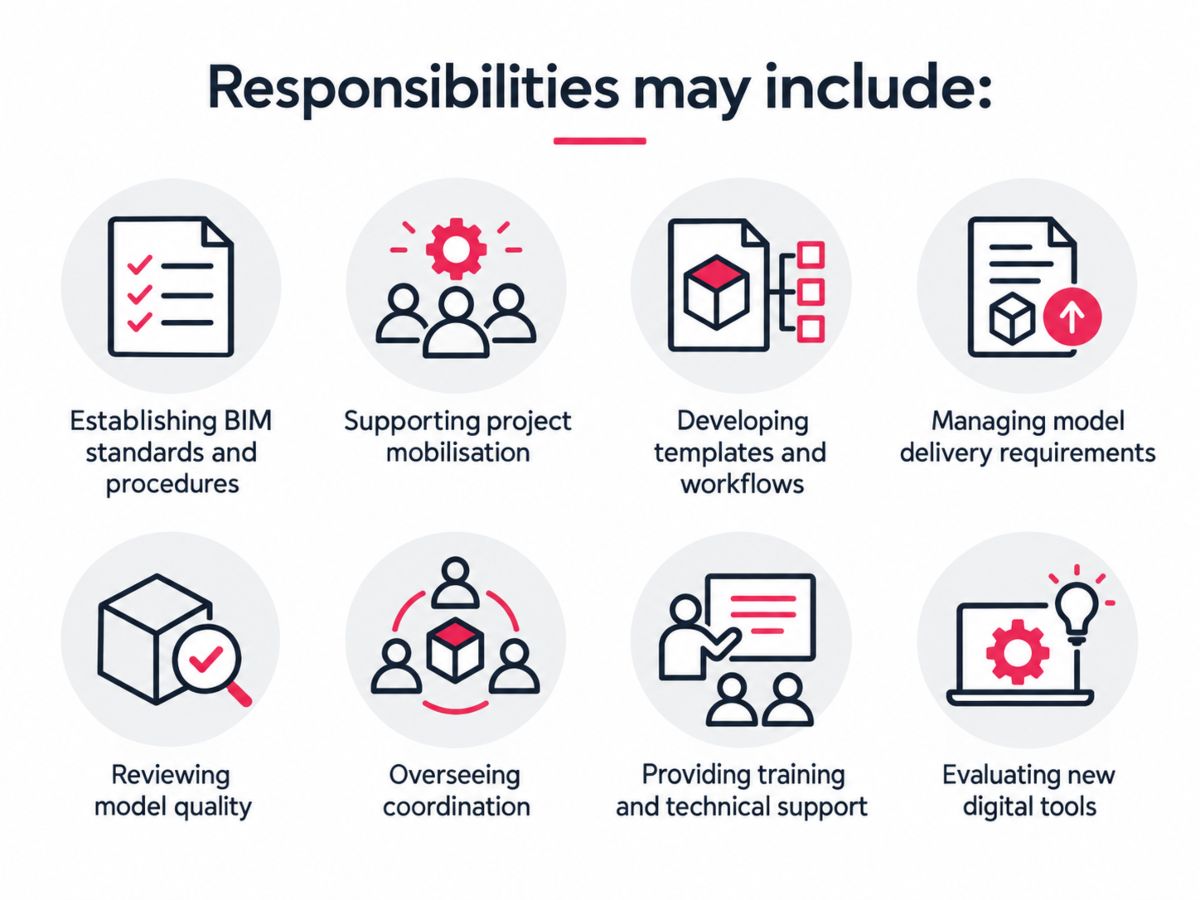
The BIM Manager may also contribute to the BIM Execution Plan and help define how models and project information will be produced, reviewed and exchanged.
The scope of the role can vary considerably.
One BIM Manager may lead company-wide digital strategy, while another may focus on model coordination and technical delivery for a single project.
This variation is why employers and project teams should define responsibilities clearly instead of relying on the job title alone.
Information Manager
An Information Manager focuses on how project and asset information is specified, produced, checked, approved, exchanged and retained.
The role covers more than digital models. It can include documents, data, schedules, records and other information containers.
Information Managers are often closely involved with the Common Data Environment, helping ensure information moves through the correct workflow states and remains controlled, traceable and accessible.
Information Management is not necessarily carried out by one person. The required activities may be distributed across project teams, lead appointed parties, delivery teams or specialist consultants.
BIM Manager vs Information Manager
BIM Managers and Information Managers may work closely together, and one person may perform both functions on a smaller project.
The main difference is usually the focus of the work.
| BIM Manager | Information Manager |
|---|---|
| Often focused on BIM implementation | Focused on information requirements and governance |
| Oversees modelling standards and technology | Oversees information processes and exchanges |
| Supports modelling and coordination teams | Supports everyone producing or managing information |
| May manage model checking and delivery | May manage approvals, status, metadata and assurance |
| Often concentrated on design and construction | Can extend through handover and asset operation |
A BIM Manager can move into Information Management, but it is not simply a title change.
The role usually requires a broader understanding of information requirements, governance, assurance and lifecycle delivery.
Hybrid titles such as BIM and Information Manager, Digital Information Manager and BIM Information Manager may be used where responsibilities overlap.
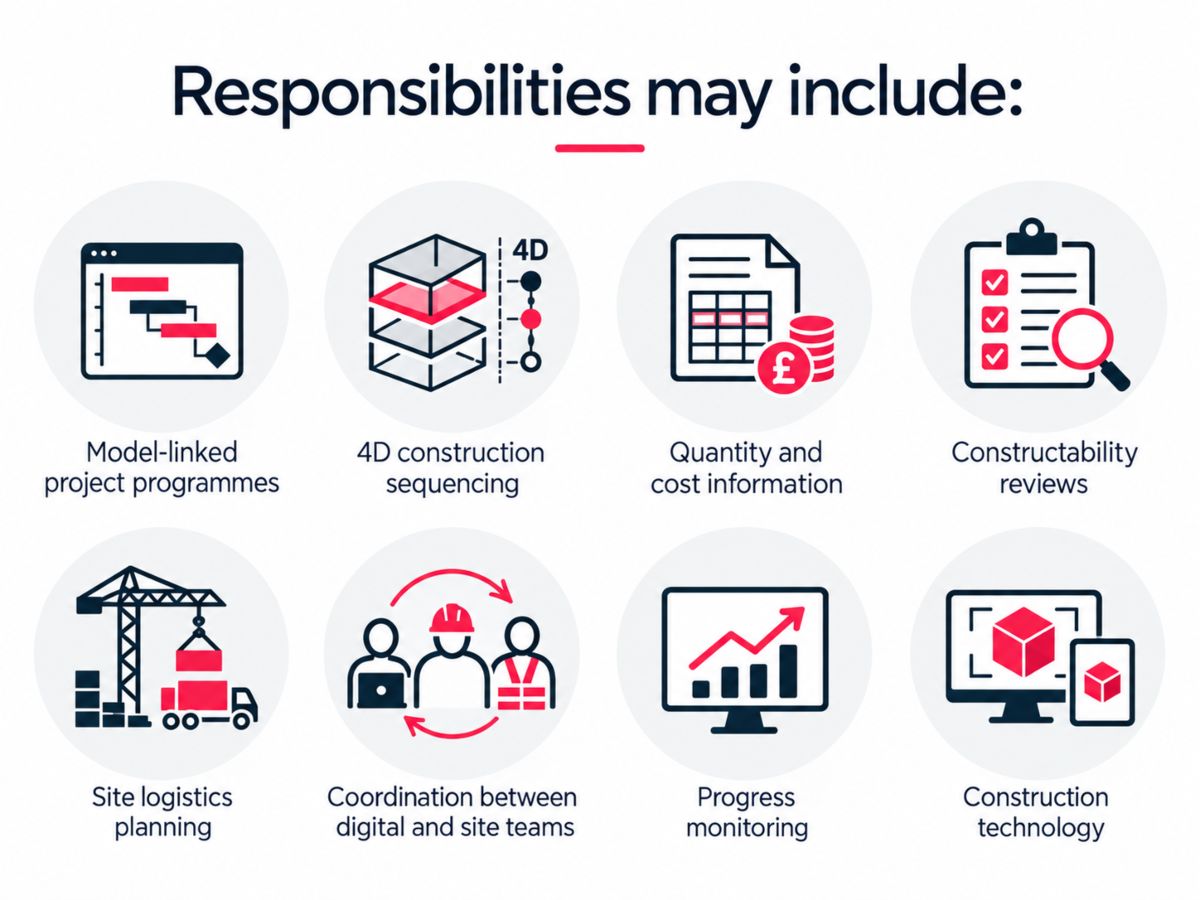
Digital Construction or VDC Lead
Digital Construction and Virtual Design and Construction roles connect digital information with the planning and delivery of construction.
Depending on the organisation, this may be a hands-on project position or a more senior consultant, client-facing or programme-level role.
A Digital Construction or VDC Lead may therefore oversee the successful implementation of:
Different employers may use titles such as Digital Construction Manager, Digital Delivery Lead, VDC Lead or Construction Technology Lead for similar positions.
This career route suits people who enjoy applying project information to practical construction challenges.
It requires an understanding of how projects are planned and delivered, rather than expertise in one software platform alone.
Digital Twin and Asset Information Lead
Digital Twin and Asset Information roles focus on making project information useful after construction has finished.
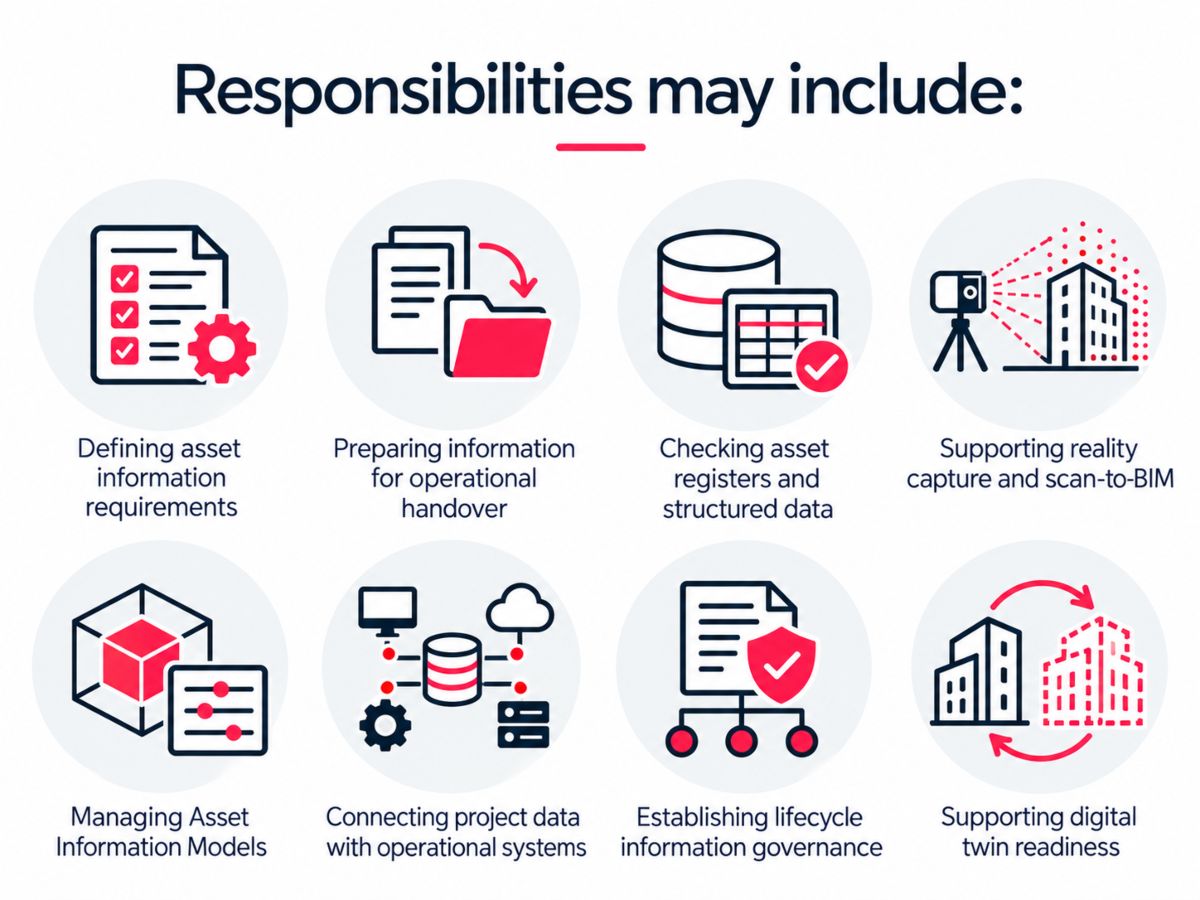
A digital twin is more than a detailed 3D model. It relies on connected, dependable information that supports decisions about the physical asset.
These careers may combine BIM with facilities management, asset management, data governance and systems integration.
They are particularly important where owners need accurate information for maintenance, compliance and long-term asset performance.
A structured construction handover process is often the starting point for turning project information into something operational teams can actually use.
How Does BIM Career Progression Work?
The traditional BIM career path often looked like this:
BIM Technician → BIM Coordinator → BIM Manager
That remains a valid route, but professionals can now progress in several directions.
Model production
BIM Modeller → Senior BIM Modeller → Discipline BIM Lead
This route suits people who want to develop advanced modelling, technical or automation skills.
Coordination
BIM Coordinator → Senior BIM Coordinator → Project BIM Manager
This path focuses on multidisciplinary coordination, model assurance and project delivery.
Information Management
Information Coordinator → Information Manager → Head of Information Management
This route places greater emphasis on requirements, standards, workflows, governance and information assurance.
Digital construction
BIM Coordinator → Digital Construction Manager → Digital Delivery Lead
This path connects digital information with planning, sequencing, logistics and site delivery.
Asset information
Asset Information Coordinator → Asset Information Manager → Digital Twin or Asset Information Lead
This route focuses on handover, operations and the long-term use of asset data.
Career progression is not always a straight climb upwards.
Professionals may move between modelling, coordination, Information Management, digital delivery and asset operations as their experience develops.
The continued demand for BIM careers makes people who can combine technical, information and project delivery skills particularly valuable.
What Skills Do BIM Professionals Need?
Software knowledge remains useful, but successful BIM careers require more than knowing how to operate Revit, Navisworks or a Common Data Environment.
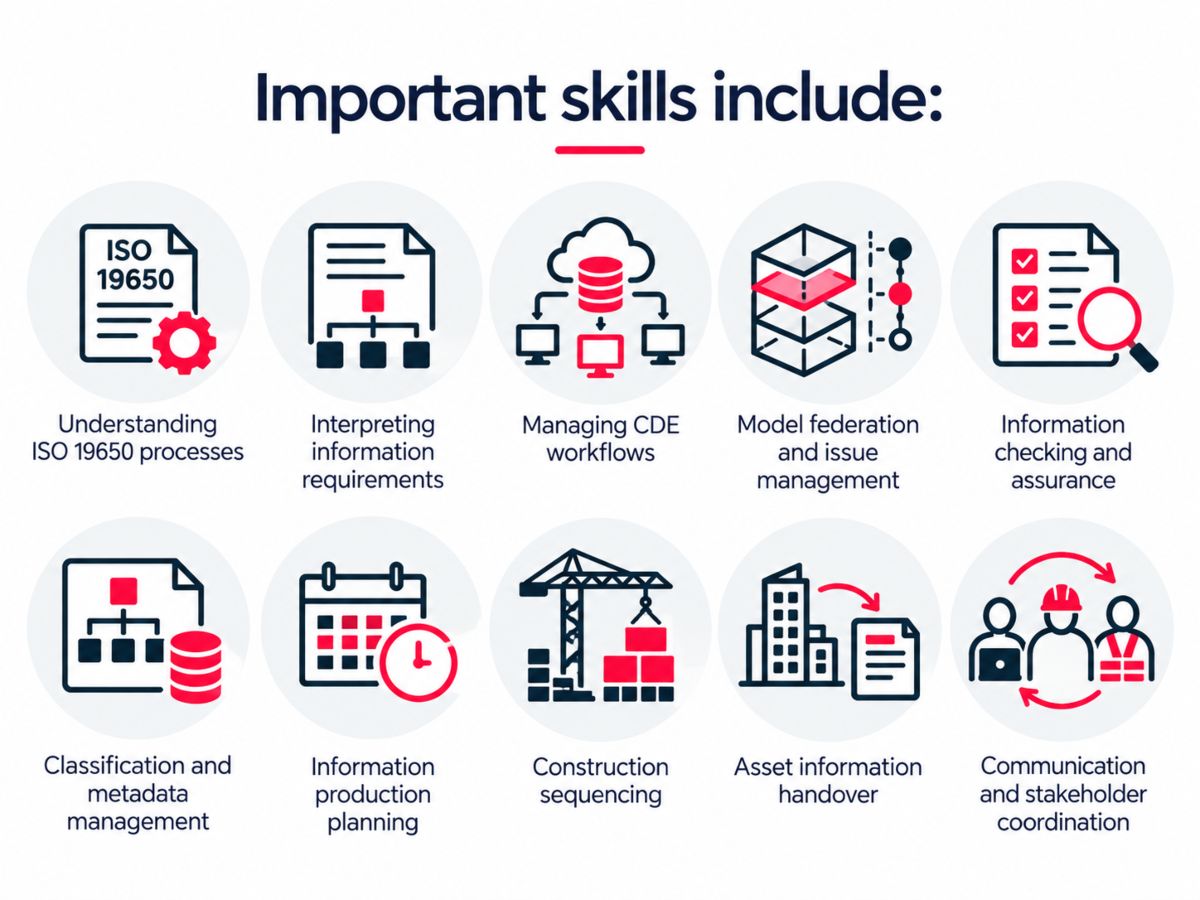
As professionals progress, they are likely to spend less time producing models themselves.
Senior roles require people who can connect project requirements, teams, processes, technology and information across the asset lifecycle.
Which BIM Career Path Is Right for You?
The right career path depends on which part of BIM and digital construction interests you most.
Choose modelling if you enjoy producing detailed technical information and developing software expertise.
Choose coordination if you like solving multidisciplinary problems and working across design teams.
Choose Information Management if you are interested in requirements, standards, workflows, governance and information quality.
Choose digital construction or VDC if you want to work more closely with programming, sequencing, logistics and site delivery.
Choose asset information or digital twins if you are interested in handover, operations and long-term asset performance.
Do not become too attached to one job title.
Different employers may use different titles for similar roles, so always look carefully at the responsibilities, required skills and position within the project lifecycle.
BIM Career Path FAQs
Is a BIM Manager the same as an Information Manager?
Not necessarily.
A BIM Manager commonly focuses on BIM implementation, models, technology and coordination. An Information Manager has a wider focus on information requirements, governance, review, approval and lifecycle delivery.
One person may perform both roles, particularly on smaller projects.
Is BIM still a good career?
BIM remains an important part of design, construction and asset management.
However, the strongest opportunities increasingly combine BIM knowledge with Information Management, digital delivery, data assurance, construction planning or asset operations.
Do you need to know Revit for a BIM career?
Revit is one of several BIM authoring tools used in modelling and coordination, but it is not essential for every BIM career.
Information Management, CDE, digital delivery and asset information roles may place greater emphasis on processes, data, governance and communication.
Can a BIM Coordinator become an Information Manager?
Yes.
BIM Coordinators often develop useful experience in information exchanges, model assurance, standards and multidisciplinary workflows.
Moving into Information Management may require additional knowledge of information requirements, governance, CDE processes, approvals and lifecycle delivery.
Building a Career Beyond BIM Software
BIM is not disappearing. It is becoming part of a wider approach to Information Management and digital project delivery.
Modelling and coordination remain essential, but they must connect with information requirements, construction planning, handover and asset operation.
The most valuable BIM professionals will not be defined by a single job title or software package. They will understand how people, processes and technology work together to produce reliable information throughout the asset lifecycle.
This wider move towards connected information is also central to the industry’s progression towards Level 3 BIM and more integrated digital delivery.
REBIM® supports this approach through secure collaboration, configurable workflows and controlled project and asset information.